The Nest Tent is Malapa’s seasonal safari tent: a complete guest unit, furniture included, that packs into its own floor cassettes, is manufactured in about 10 weeks and can be assembled on site in around a week by local labour.
What is the Nest Tent?
The Nest Tent is a refined seasonal safari tent designed for remote settings where light impact, comfort and atmosphere matter equally. It is engineered as a complete, self-contained system: the steel frame, canvas, floor, bathroom and custom-designed furnishings are all part of one product, rather than a shell that is fitted out separately.
A raised steel frame sits lightly on the land and extends into a deck oriented for views, airflow and outdoor living. Inside, the tent balances openness with privacy, with a full en-suite bathroom and a bed layout that adapts to different guest configurations.
How does the Nest Tent pack into its own floor?
Every part of the tent, including the furniture, packs into the floor cassettes that later become its floor. Packed, a Nest Tent measures 1140 mm wide, 3600 mm long and 710 mm high, which makes it efficient to transport to remote sites and compact to store in the off-season.
On site, the tent goes up in three stages:
Floor cassettes: the cassettes are unpacked and set out on adjustable steel feet.
Floor and frame: the cassettes lock together into the platform and the steel frame is raised on top.
Canvas and fit-out: the canvas body and flysheet go on, followed by the bathroom and furniture.
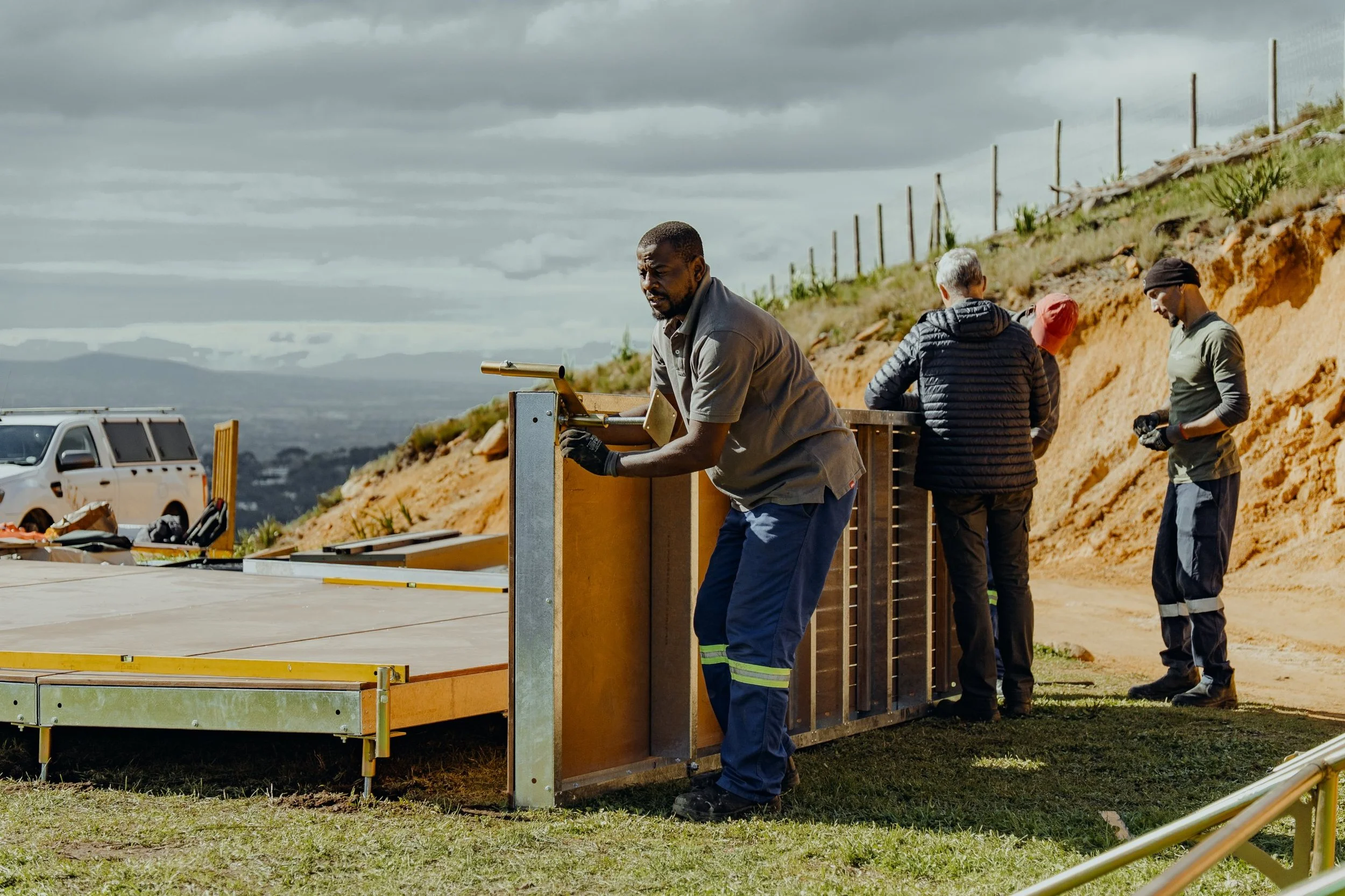
Floor cassettes are unpacked on site and locked together into the tent’s raised platform.
What is the Nest Tent made from?
The materials are chosen for remote, exposed sites and for repeated seasonal assembly:
Flysheet: 500 gsm ripstop canvas, in sand, olive or charcoal.
Tent body: 400 gsm ripstop canvas with mesh panels and openings.
Frame: mild steel, electro-galvanised and powder coated in charcoal, taupe or sand.
Floor: cassettes of galvanised steel profiles with stained marine plyboard.
Foundation: adjustable electro-galvanised mild steel feet instead of a concrete slab.
Interior: custom furniture and fittings designed by Malapa.
The canvas and steel colour options let each tent respond to its surroundings, so a camp can blend into bushveld, riverine forest or open plains.
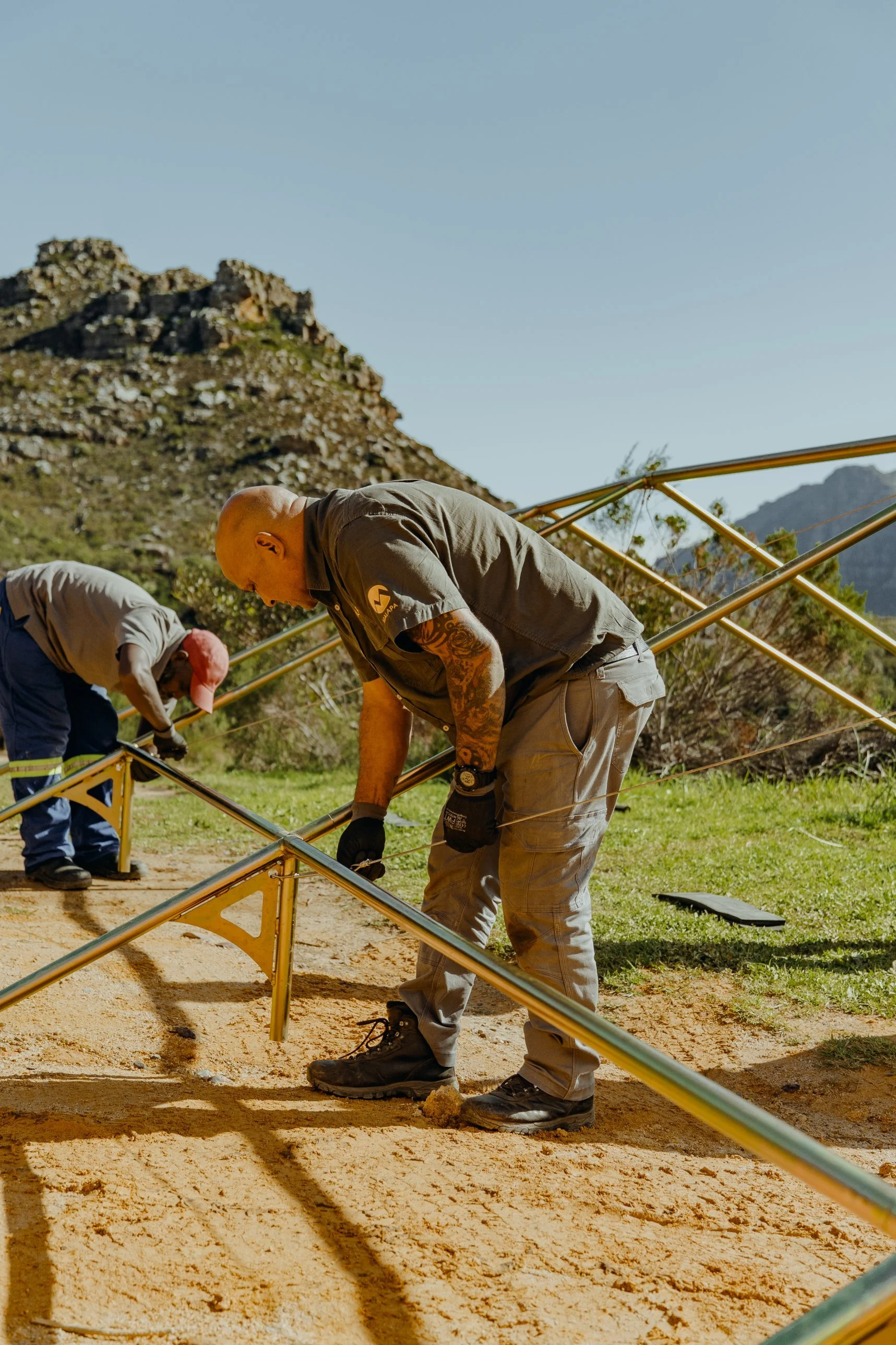
The galvanised steel frame is raised on top of the platform and tensioned before the canvas goes on.
What is inside a Nest Tent?
The tent and deck together cover 3.6 m by 6.84 m. From the back of the tent to the front, the layout runs through a bathroom, a dressing area, the bedroom and a covered deck.
Bathroom: a full en-suite with toilet, shower and vanity, plus an optional external shower.
Bedroom: two layouts, either two singles or one king bed.
Dressing: wardrobes behind the bed wall.
Deck: a pair of armchairs and a side table, with room for an additional decking cassette.
Why build a seasonal safari tent this way?
Remote camps are expensive to supply and slow to build, and many sites are only open for part of the year. Designing the tent as a complete kit that packs into its own floor addresses each of those problems:
Lower site impact: the raised frame on adjustable feet avoids concrete foundations and minimises disturbance to the ground.
Faster deployment: manufacturing happens off-site, so time on site is measured in days rather than months.
Local assembly: the system is designed to be self-built or assembled by local labour.
Off-season storage: the whole tent packs back down into its cassettes when the camp closes.

The finished floor platform on its adjustable steel feet, with the canvas still packed alongside.
Where has the Nest Tent design been used?
The Nest Tent builds on the seasonal safari tents Malapa designed and built for Chicari Camp in Gorongosa National Park, Mozambique. Lessons from that project fed directly into this version of the design. You can see more of Malapa’s camps and lodges in the portfolio.
Frequently asked questions
How long does a Nest Tent take to manufacture?
The indicative manufacturing lead time is 10 weeks.
How long does it take to install?
Site installation takes around one week per tent, and can be done by the client’s own team or local labour.
Does it need a concrete foundation?
No. The tent stands on adjustable steel feet, which keep it level on uneven ground without a slab.
Can the colours be changed?
Yes. The canvas comes in sand, olive or charcoal, and the steel frame can be powder coated in charcoal, taupe or sand.
What warranty does it come with?
The steel structure carries a 5-year structural warranty and the canvas a 2-year warranty, with a 1-year warranty on electrics, plumbing and drainage.
To discuss Nest Tents for your site, start a project with Malapa.